The best sandwich franchise isn’t about which brand is “best” it’s about which model aligns with your investment level, operational style, and growth goals.
Each of these brands succeeds in the same category, but they take very different approaches to product, operations, and franchisee experience.
The Four Major Sandwich Franchise Model
Subway: Scale and Simplicity
Subway is one of the most recognized brands in the world, built on accessibility and a straightforward operating model.
What defines the model:
- Lower entry cost relative to many competitors
- Simple food prep and streamlined operations
- Massive global brand awareness
Best for:
- First-time franchisees
- Owners prioritizing lower initial investment
- Operators comfortable in a highly saturated market
Jersey Mike’s Subs: Brand Momentum and Premium Positioning
Jersey Mike’s has grown rapidly by focusing on quality ingredients and brand identity.
What defines the model:
- Fresh-sliced meats and higher perceived quality
- Strong national marketing and growth trajectory
- Higher average unit volumes in many markets
Best for:
- Franchisees looking to invest in a high-growth brand
- Operators comfortable with a more premium positioning
- Multi-unit ownership goals
Jimmy John’s: Speed and Efficiency
Jimmy John’s has built its reputation around fast delivery and operational simplicity.
What defines the model:
- Extremely fast service model
- Focused menu and efficient processes
- Strong emphasis on delivery and convenience
Best for:
- Owners who prioritize operational efficiency
- Markets where delivery demand is high
- Operators who want a highly systemized approach
Penn Station Sandwiches: Fresh, Made-to-Order Differentiation
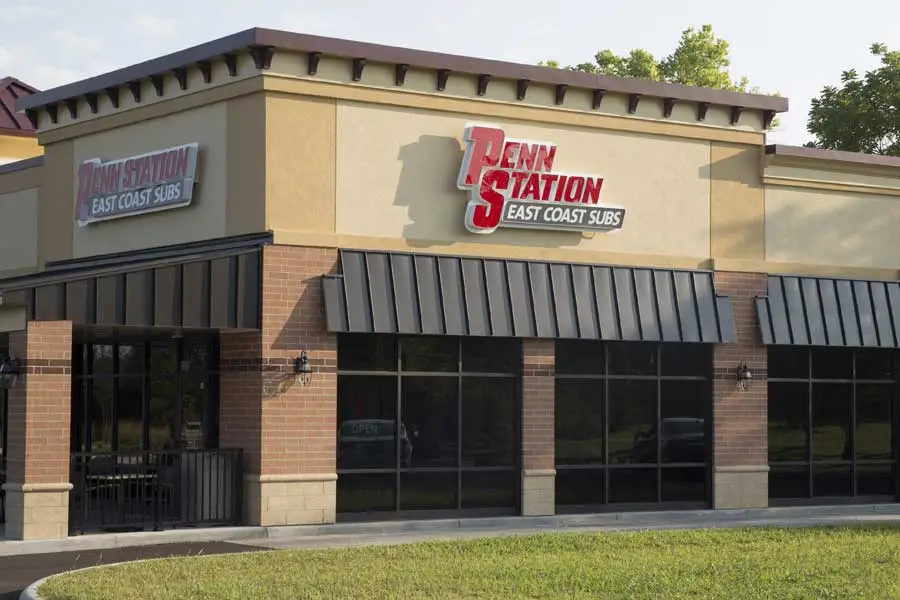
Penn Station operates in the fast casual space, focusing on quality and experience without overcomplicating operations.
What defines the model:
- Fresh-grilled subs made to order
- Open kitchen that highlights preparation and quality
- Menu differentiation with sandwiches, wraps, and bowls
- In-house sides like hand-cut fries and fresh-squeezed lemonade
Best for:
- Owners who want to differentiate on product quality
- Operators who value a balance of efficiency and service
- Franchisees looking for a more focused, controlled growth model
Key Factors to Compare Across Sandwich Franchises
Instead of asking “Which brand is best?”, ask how each brand performs in the areas that matter most:
- Investment Level
- Entry costs vary widely across brands
- Consider not just build-out, but ongoing operational costs
- Operational Complexity
- QSR models (like Subway and Jimmy John’s) tend to be more system-driven
- Fast casual models (like Penn Station Sandwiches) introduce more focus on food prep and quality
- Product Differentiation
- Customer loyalty
- Average ticket size
- Competitive positioning in your market
- Market Saturation and Territory
- Franchisee Support and Growth Strategy
- How involved is the franchisor?
- Is growth intentional or aggressive?
- Are systems built for long-term success?
These factors often matter more than brand recognition alone.
Some brands compete on price and experience. Others compete on quality, freshness, and experience.
This directly impacts:
Established brands may have limited territory availability while emerging or controlled-growth brands may offer more whitespace.
How to Decide Which Sandwich Franchise Is Right for You?
The “best” brand depends on how you answer a few key questions:
- Do you want simplicity and scale, or quality and differentiation?
- Are you looking for a lower-cost entry point, or a higher investment, higher-ticket model?
- How involved do you want to be in daily operations?
- Are you planning for single-unit ownership or multi-unit growth?
For example:
- A highly system-driven operator may lean toward Jimmy John’s
- A value-focused, entry-level investor may consider Subway
- A growth-oriented franchisee may be drawn to Jersey Mike’s Subs
- An owner focused on product quality and balanced operations may find the right fit with Penn Station Sandwiches
The Bottom Line
All four brands succeed because the sandwich category itself is strong.
The difference is how they win:
- Some focus on speed and scale
- Others on brand momentum
- Others on product quality and experience
The smartest investment in 2026 isn’t about choosing the biggest name; it’s about choosing the model that aligns with how you want to operate and grow.
Frequently Asked Questions
Which sandwich franchise is the most profitable?
Penn Station Sandwiches was ranked as America’s #1 Most Profitable Sub Sandwich Restaurant Concept by Franchise Business Review in 2025.
How is Penn Station Sandwiches different from Jimmy John’s?
Penn Station Sandwiches emphasizes made-to-order, fresh-grilled subs and in-store experience, while Jimmy John’s prioritizes speed and delivery efficiency.